

Alexandre Oliva's Home Page
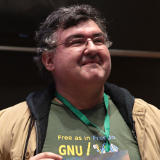

 Welcome to my home page!
As of June, 2005, I've joined the efforts to
create FSF Latin America. I'm
FSFLA's board member, and for a long time I maintained my blog
there: Blonging for Freedom.
At LibrePlanet 2017,
I received the
FSF
Award for the Advancement of Free Software. In August, 2019,
I
joined the FSF board of directors and became a voting member.
In January, 2021,
I resigned from the
board, but I was elected back in June, 2025, and
got confirmed
as board member in September, 2025.
Follow me in the Fediverse, the freedom-respecting social
network, on snac.
I'm also lxo in GNU Jami, and
I have
a Tox
ID.
I've been a GNU Toolchain Engineer
at AdaCore since June, 2018.
I was also a GNU Toolchain Engineer
at Red Hat from February,
2000
to June,
2019. I worked on porting toolchains to various embedded
microprocessors, and more recently on optimizations and debugging
information for optimized programs, an interface for GDB to
compile code snippets with G++ to extend a running program, and a
full code review of GNU libc in order to document various safety
properties. My last major project
was gOlogy: a study of the impact of nearly
all of GCC's optimization passes on debug information quality.
In 1998, I got a MSc degree in Computer Sciences at
the Distributed Systems
Laboratory at
the Institute of Computing
of the
State University of Campinas
(UNICAMP). I used to research Software Engineering, Computational
Reflection (read about it in
the Guaraná Home Page) and
Distributed Systems.
Welcome to my home page!
As of June, 2005, I've joined the efforts to
create FSF Latin America. I'm
FSFLA's board member, and for a long time I maintained my blog
there: Blonging for Freedom.
At LibrePlanet 2017,
I received the
FSF
Award for the Advancement of Free Software. In August, 2019,
I
joined the FSF board of directors and became a voting member.
In January, 2021,
I resigned from the
board, but I was elected back in June, 2025, and
got confirmed
as board member in September, 2025.
Follow me in the Fediverse, the freedom-respecting social
network, on snac.
I'm also lxo in GNU Jami, and
I have
a Tox
ID.
I've been a GNU Toolchain Engineer
at AdaCore since June, 2018.
I was also a GNU Toolchain Engineer
at Red Hat from February,
2000
to June,
2019. I worked on porting toolchains to various embedded
microprocessors, and more recently on optimizations and debugging
information for optimized programs, an interface for GDB to
compile code snippets with G++ to extend a running program, and a
full code review of GNU libc in order to document various safety
properties. My last major project
was gOlogy: a study of the impact of nearly
all of GCC's optimization passes on debug information quality.
In 1998, I got a MSc degree in Computer Sciences at
the Distributed Systems
Laboratory at
the Institute of Computing
of the
State University of Campinas
(UNICAMP). I used to research Software Engineering, Computational
Reflection (read about it in
the Guaraná Home Page) and
Distributed Systems.
The "ytdl://" URI scheme I use to link to third-party videos
stored in a hostile proprietary video hosting platform enables one
to download the videos with such programs as youtube-dl and ytdlp,
to stream them directly onto such programs as vlc and mpv, and to
watch them in web browsers without running proprietary web blobs
at various Invidious web sites.
On Aug 14, 2026, I participated in a round table about Free
Software at SeComp-Unicamp
2026. Here's
a recording.
In my spare time, I'm an amateur singer. I sing to myself,
and after a long hiatus last year I got back to choir singing,
with choir ADunicamp Entrevozes. On May 21, 2026, we held an
internal musicale. I
sang Beatriz, by Chico
Buarque and Edu Lobo, accompanied by Paulo Rowlands on the piano.
I also blogged (in pt_BR) about
the song.
Since March 18, 2026, I've been
publishing informative
blog posts
(with social
media summaries) about the Brazilian Age Verification law,
ECA!Digital, that outlaws the distribution of general-purpose
freedom-respecting operating systems to end users of all ages.
On April 25, 2026,
during FliSoL/Mini
DebConf Campinas, I took part in a debate (in Portuguese)
about this law (recording,
peertube).
On Jan 28, 2026, I participated in Fireside Fedi
(audio,
peertube
video).
On Sept 28, 2025, I first presented "Handling C++ Exception
Hierarchies in Ada"
(slides,
video)
at the GNU Tools
Cauldron.
On Sept 27, 2025, I first presented "Time-traveling through
the GCC PR database and testsuite"
(slides) at
the GNU Tools
Cauldron. Something went wrong with the recording, there was
no audio for the presentation and most of the discussion
afterwards, but fortunately a special moment at the end was
captured almost entirely: the celebration of the 42nd anniversary
of the GNU Project, with the first
ever public performance of "Happy Hacking to GNU".
On Sept 1, 2025, I was interviewed by Cristiano Furtado for
his show "Bate Papo Nerd". Here's an
audio recording. The video is available
elsewhere.
 On May 5, 2024, I first presented "Software Enshittification
or Freedom -- It's not a hard choice!"
at LibrePlanet 2024
(LibrePlanet
video, slides,
planscript).
On Aug 16, 2025, I first presented it in Portuguese
(slides,
video),
as part of
Debian Day
Campinas. It was also presented
at Festa do
Software Livre on Oct 3, 2025 (no recording), during
IME-USP's Computing
Week, on Oct 22, 2025
(video),
and at the series of
computing lectures at IC-Unicamp on Feb 27, 2026
(recording).
On May 5, 2024, I first presented "Software Enshittification
or Freedom -- It's not a hard choice!"
at LibrePlanet 2024
(LibrePlanet
video, slides,
planscript).
On Aug 16, 2025, I first presented it in Portuguese
(slides,
video),
as part of
Debian Day
Campinas. It was also presented
at Festa do
Software Livre on Oct 3, 2025 (no recording), during
IME-USP's Computing
Week, on Oct 22, 2025
(video),
and at the series of
computing lectures at IC-Unicamp on Feb 27, 2026
(recording).
On Aug 14, 2023, I first presented "Free Software: Freedom,
Autonomy, and Sovereignty", in Spanish
(recording, slides,
planscript,
audio
and transcript), to the Central American Parliament
(full
webinar recording).
On Nov 1, 2023, I first presented it in Portuguese
(slides),
for Semcomp SSA 2023.
On Nov 12, 2024, it was presented in Portuguese at
10º
Cinfotec Unicamp (recording).
It was also presented in Portuguese
at Festa do
Software Livre on Oct 5, 2025
(video),
and
at FliSoL/Mini
DebConf Campinas on April 25, 2026
(recording,
peertube).
On Sept 27, 2022, I first presented "The Free Software
Movement and the GNU Project" (in Portuguese) at University of
Campinas. It was an informal conversation, and unfortunately the
recording didn't work.
On Sept 16, 2022, at
the GNU Tools
Cauldron, I'm presenting "New and upcoming Hardening Features
in GCC" (slides).
On Jan 21, 2021, I
launched diag2021, a diagnosis
program that takes a description of symptoms, and recommends
actions that may alleviate the problem. It's a reaction to an app
published by Jair Bolsonaro's Ministry of Health, that recommends
medicines already shown to have no positive effects in treating or
preventing COVID-19, and often even fatal effects. My "corrected"
version only recommends the impeachment of president Bolsonaro.
That may not have been scientifically proven to solve the problem,
but it's very unlikely to have any detrimental side effects.
 I launched my new project,
0G, with the
speech "Escaping the Surveillance Blackhole with Free Mobile
Computing" (slides, slightly
modified; recording,
DebConf's
recording and slides),
at DebConf 19, on
July 23, 2019.
An updated presentation was streamed on Oct 13, 2020, for
the NUUG
Oslo's monthly meeting
(video).
The pt_BR launch took place on Aug 3, 2019
at [GNU/]Linux Developer
Conference Brazil, with translated
slides (video).
An updated presentation, using the
same set of slides, was delivered on Aug 21, 2026, for
the series of
computing lectures at IC-Unicamp
(recording).
I launched my new project,
0G, with the
speech "Escaping the Surveillance Blackhole with Free Mobile
Computing" (slides, slightly
modified; recording,
DebConf's
recording and slides),
at DebConf 19, on
July 23, 2019.
An updated presentation was streamed on Oct 13, 2020, for
the NUUG
Oslo's monthly meeting
(video).
The pt_BR launch took place on Aug 3, 2019
at [GNU/]Linux Developer
Conference Brazil, with translated
slides (video).
An updated presentation, using the
same set of slides, was delivered on Aug 21, 2026, for
the series of
computing lectures at IC-Unicamp
(recording).
On Sep 8, 2018, at
the GNU Tools
Cauldron in Manchester, UK, in a session
entitled A
collection of debug info improvements for the GNU Compiler
Collection, I first presented
"gOlogy: impact of -O* on -g"
(slides), the highlights
of a study of the effects on debugging of the various passes
enabled by -O flags in GCC.
 On Jul 13, 2018, I first presented "Who's afraid of Spectre &
Meltdown" in Portuguese
(slides, video)
at FISL18.
An article
with the same title was published after updates reflecting
NetSpectre.
It was presented on Aug 16, 2018, at USP EACH, with updates
reflecting NetSpectre and ForeShadow
(slides, audio).
It was first presented in English
(slides, video),
at [GNU/]Linux Dev Conf BR,
on Aug 25, 2018, and then
at LibrePlanet 2019
on Mar 24, 2019
(LibrePlanet video, updated
slides) and
at DebConf 19
(recording),
on July 20, 2019.
On Jul 13, 2018, I first presented "Who's afraid of Spectre &
Meltdown" in Portuguese
(slides, video)
at FISL18.
An article
with the same title was published after updates reflecting
NetSpectre.
It was presented on Aug 16, 2018, at USP EACH, with updates
reflecting NetSpectre and ForeShadow
(slides, audio).
It was first presented in English
(slides, video),
at [GNU/]Linux Dev Conf BR,
on Aug 25, 2018, and then
at LibrePlanet 2019
on Mar 24, 2019
(LibrePlanet video, updated
slides) and
at DebConf 19
(recording),
on July 20, 2019.
 On Mar 26, 2017, I first presented The Post-Truth Santa Claus
and the Concealed Present
(slides, video)
at LibrePlanet
2017.
It was also presented, in Portuguese,
at FLISoL
Araraquara (video), on April
8, 2017, at
the Free
Software Lectures series at University of Campinas on April
12, 2017 (audio recording),
at SECOMP Unicamp on
August 1st, 2017, on September 28, 2017,
at FTSL, in Curitiba, on July
11, 2018, at FISL18,
and on Sept 28, 2018, in
the series
of computing lectures of the Institute of Computing at
Unicamp.
On Mar 26, 2017, I first presented The Post-Truth Santa Claus
and the Concealed Present
(slides, video)
at LibrePlanet
2017.
It was also presented, in Portuguese,
at FLISoL
Araraquara (video), on April
8, 2017, at
the Free
Software Lectures series at University of Campinas on April
12, 2017 (audio recording),
at SECOMP Unicamp on
August 1st, 2017, on September 28, 2017,
at FTSL, in Curitiba, on July
11, 2018, at FISL18,
and on Sept 28, 2018, in
the series
of computing lectures of the Institute of Computing at
Unicamp.
On Sept 14, 2016, I presented at Encripta Tudo Unicamp a
first draft of a speech about freedom-respecting cryptography
software and decentralized communication tools to resist
corporatocracy, government surveillance and the upcoming
dictatorships. No title, no slides, no recording yet, but stay
tuned.
On Oct 29, 2016, I presented "HaL e SoL, ou HAL 9000", in
Portuguese, (slides,
video) at
e-HaL. I presented it again on
Jul 12, 2018 (video)
at FISL18.
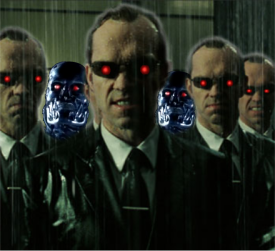 On Mar 20, 2016, I
presented The Singularity, The
Matrix and The Terminator (video)
at Libreplanet 2016.
On Jul 14, 2016, I presented it at FISL 17,
for the first time in
Portuguese. It was presented again on Sept 17, 2016, at
Software Freedom
Day Campinas 2016, on Oct 21, 2016,
at OpenCon
Campinas (first time
with slides in Portuguese), on
September 27, 2017, at FTSL,
in Curitiba, and on April 28, 2018
(audio), at FLISoL Araraquara.
See also Free Software and the Matrix
below.
On Mar 20, 2016, I
presented The Singularity, The
Matrix and The Terminator (video)
at Libreplanet 2016.
On Jul 14, 2016, I presented it at FISL 17,
for the first time in
Portuguese. It was presented again on Sept 17, 2016, at
Software Freedom
Day Campinas 2016, on Oct 21, 2016,
at OpenCon
Campinas (first time
with slides in Portuguese), on
September 27, 2017, at FTSL,
in Curitiba, and on April 28, 2018
(audio), at FLISoL Araraquara.
See also Free Software and the Matrix
below.
At FISL 16, I first presented "Exorcism of Proprietary
BIOSes" in Portuguese
(slides,
video),
about Libreboot, a Free BIOS implementation.
It was also presented, combined
with the one about Restricted Boot, at Focus
on Technology at Unicamp Limeira 2015.
Unfortunately, after those presentations, the main author and
maintainer of Libreboot quit the GNU Project and started shipping
proprietary blobs, defeating the purpose of a libre project, and
betraying users misled by the project's name. (I refer to such
jerk moves as "pulling a Linux", because that was done to the
kernel Linux in 1996, motivating
Linux-libre.)
Fortunately, GNU
Boot came to the rescue, as a successor to the GNU Libreboot
project. See also this other speech and
this
article.
Also at FISL 16, Anahuac de Paula Gil and I presented "O Tux
não nos representa!" (meaning "Tux doesn't stand for us!") in
Portuguese (slides,
video).
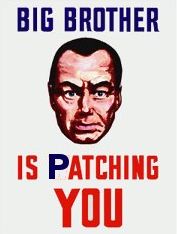 On Mar 23, 2014, I first
presented 1984+30: GNU speech to
defeat e-newspeak
at LibrePlanet 2014,
also presented at FISL 15; at Software Freedom Day Campinas 2014;
at SECOMP UFSCar 2014; at Focus on Technology at Unicamp Limeira
2014; on Mar 18, 2015 at UFABC São Bernardo; at EXPOTEC 2015 in
João Pessoa.
On Mar 23, 2014, I first
presented 1984+30: GNU speech to
defeat e-newspeak
at LibrePlanet 2014,
also presented at FISL 15; at Software Freedom Day Campinas 2014;
at SECOMP UFSCar 2014; at Focus on Technology at Unicamp Limeira
2014; on Mar 18, 2015 at UFABC São Bernardo; at EXPOTEC 2015 in
João Pessoa.
At FISL 14, I first
presented "GNU: 30 years fighting for
user-obedient software" (in Portuguese). It was later at the
Technology Forum at Unicamp Limeira; at Latinoware 2013; at
Computing Week at UFSCar 2013; and at the Engineering and IT Week
at Policamp 2013; at SECOMP Unicamp 2014; on Mar 9, 2015, to the
Unicamp Computing freshmen; on Mar 18, 2015 at UFABC Santo André;
at FLISOL Campinas 2015; on Aug 24, 2016 at
the Free
Software lectures at IC-Unicamp.
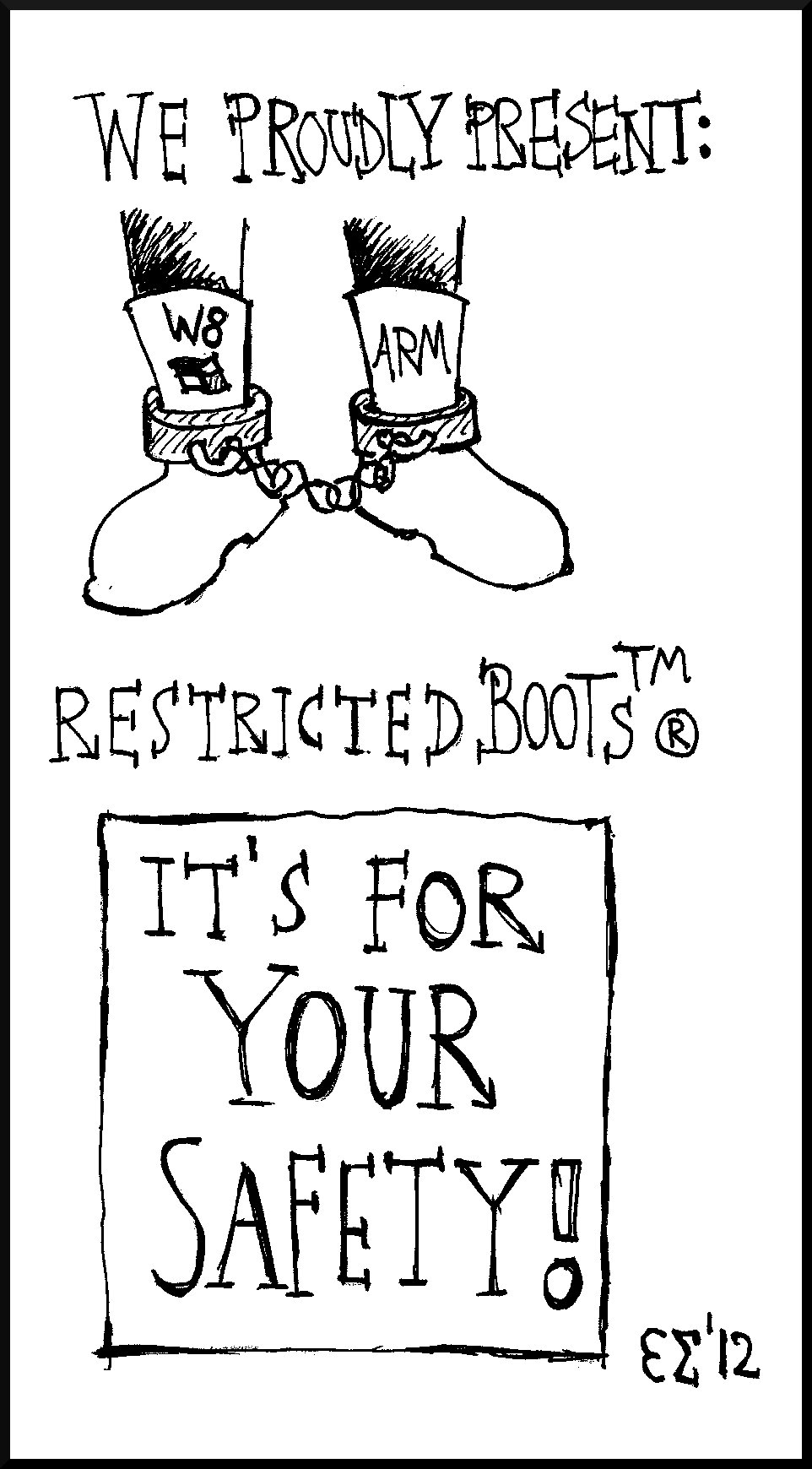 I spoke about Restricted Boot:
the False and the True Solutions (in Portuguese) at FISL 14
and Latinoware 2013.
I spoke about Restricted Boot:
the False and the True Solutions (in Portuguese) at FISL 14
and Latinoware 2013.
At FISL 14, Thadeu Cascardo and I spoke about "Hacking Banks
and the IRS", in which we discussed the proprietary tools
Brazilians must use to comply with their tax obligations, how
we're fighting that
with IRPF-Livre
and rnetclient, and how we'd like to automate netbanking
operations and how banks get in the way. There's a recording of
the session available from the FISL web site.
On Apr 9, 2013, I first
presented “Save the Hackers!”
(in Portuguese), at 3º SENID.
It was presented again
on FLISoL Campinas on Apr
27, 2013, and to the students of “Computing and Society” at
University of Campinas on May 20, 2013.
It was first in Spanish on
November 30, 2015, at the Central University in Quito, Ecuador, as
part of
the 6th
Free Software Itinerant Congress.
Red Hat Brasil invited me to speak at Red Hat Day BM&F
Bovespa on Dec 9, 2011, presenting (in Portuguese) the
speech Software Livre e
Inovação.
An updated, revamped and shortened version was presented
under the
title “Por
que Software Livre?” (Why Free Software?, or Why Open Source?,
depending on your bias) to Red Hat Brazil Global Customer
Convergence attendants on May 9, 2013.
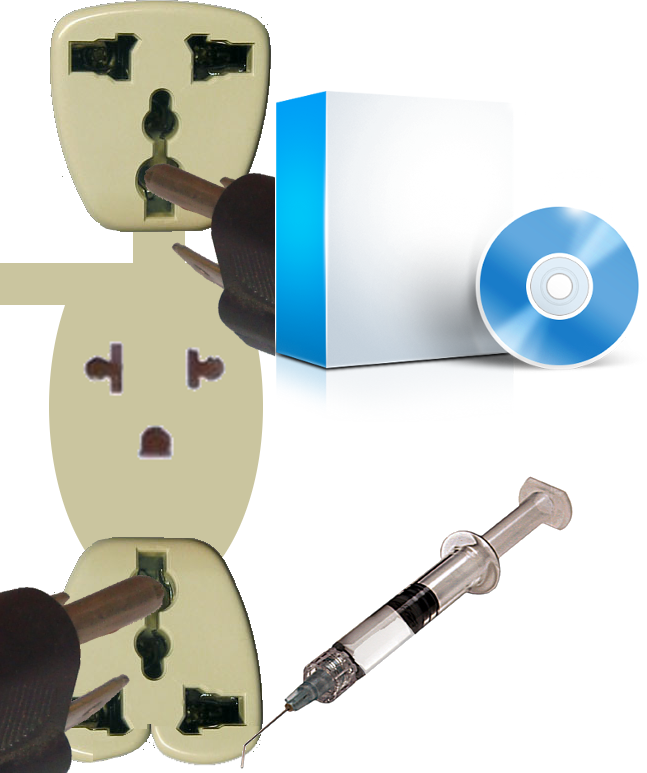 On July 23, 2010,
at FISL 11, I first
presented “Sexo, Drogas e Software:
Filosofando nas Trincheiras entre o Bem e o Mal” (“Sex, Drugs
and Software: Philosophy in the Trenches between Good and
Evil). The audio of the
speech was recorded by Adriana Bunn. A shorter version was
recorded the next day
at Radio
Software Livre. Another presentation on August 19, 2010,
at Universidade de
Brasília, was
recorded in
video. On January 22, 2011, at
Campus Party Brasil
2011, it was also captured in
video, and so was it on May 29, 2012, at Espírito Livre
magazine's 2nd forum (video).
On April 16, 2011, it was first
presented in Spanish
at FLISoL Bogotá.
On July 23, 2010,
at FISL 11, I first
presented “Sexo, Drogas e Software:
Filosofando nas Trincheiras entre o Bem e o Mal” (“Sex, Drugs
and Software: Philosophy in the Trenches between Good and
Evil). The audio of the
speech was recorded by Adriana Bunn. A shorter version was
recorded the next day
at Radio
Software Livre. Another presentation on August 19, 2010,
at Universidade de
Brasília, was
recorded in
video. On January 22, 2011, at
Campus Party Brasil
2011, it was also captured in
video, and so was it on May 29, 2012, at Espírito Livre
magazine's 2nd forum (video).
On April 16, 2011, it was first
presented in Spanish
at FLISoL Bogotá.
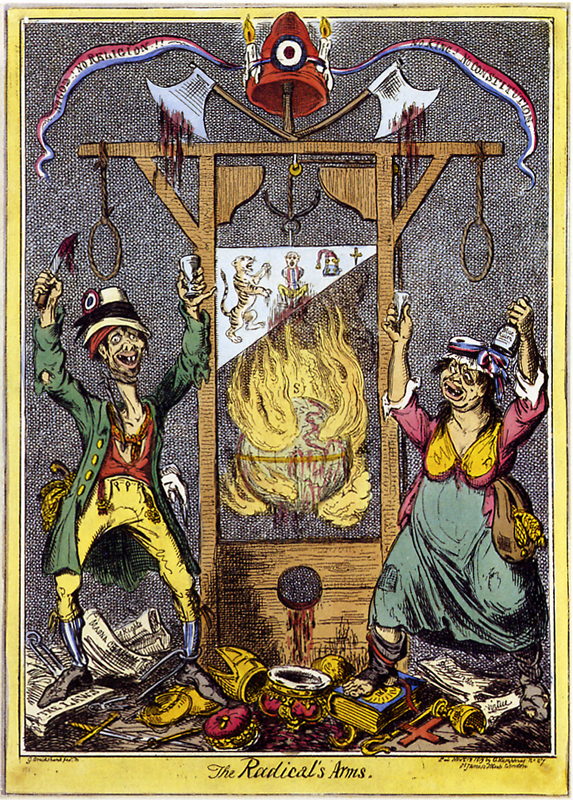 On July 21, 2010,
at FISL 11, I first
presented “Demonizando
Monopólios Intelectuais: Ao Povo o que é do Povo” (“Demonizing
Intelectual Monopolies: Returning to the People what Belongs to
the People). It was also presented on Sept 29, 2010, at
the Free
Software Lectures series at University of Campinas, and on Oct
18, 2010, at UFBA in Salvador,
at Ética Hacker e
o desenvolvimento científico e tecnológico (Hackers' Ethics
and the scientific and technological development). On January 22,
2011, at Campus Party
Brasil 2011, it was
also captured in video.
On July 21, 2010,
at FISL 11, I first
presented “Demonizando
Monopólios Intelectuais: Ao Povo o que é do Povo” (“Demonizing
Intelectual Monopolies: Returning to the People what Belongs to
the People). It was also presented on Sept 29, 2010, at
the Free
Software Lectures series at University of Campinas, and on Oct
18, 2010, at UFBA in Salvador,
at Ética Hacker e
o desenvolvimento científico e tecnológico (Hackers' Ethics
and the scientific and technological development). On January 22,
2011, at Campus Party
Brasil 2011, it was
also captured in video.
On Saturday, March 21, 2009, I first
presented Linux-libre and the
prisoners' dilemma
at Libre
Planet 2009, in Boston, Massachusetts, USA.
It was also presented on April 8, 2009, in Campinas, SP, as
part of the Free
Software Lectures series at University of Campinas, combined
with Copying and Sharing in Self
Defense and a summary of the Libre Planet 2009 conference.
A Spanish version was
recorded for FLISOL
2009, listen to this and other recorded
speeches here
The first live presentation in Spanish took place at the
FLISOL 2009
Tour (in Spanish) in
Panamá City, Panamá, on April 23, 2009. It was later presented on
September 17, 2009, at COSECOL in
Santo Domingo, Dominican Republic; on October, 30, 2009, at
Jornadas de
Software Libre
(pictures) en
Cúcuta, Colombia; on August 7, 2015
at ECSL 2015 in San
Pedro Sula, Honduras, and on December 2nd, 2015, at the Central
University in Quito, Ecuador, as part of
the 6th
Free Software Itinerant Congress.
It was first presented
with slides in Portuguese
at FISL 10, on
June 27, 2009, and then on September 25, 2009, in the week-long
Software Freedom Day
celebration at IME-USP, on
October 7, 2009, at ICMC-USP São
Carlos; on November 11, 2009,
at CESoL-CE 2009; on April 26,
2010, at
FLISOL Campinas 2010, on
May 19, 2010, at
the Free
Software Lectures series at University of Campinas, and on
August 23, 2017, again at
the Free
Software Lectures at IC-Unicamp (here's
an audio recording).
 On June 25, 2009,
at FISL 10, I
first presented “A Isca, o Anzol e a Grande Rede”, describing
visually the tactics that fishers use to capture software users
with bait, hooks and the broad net. It's based on
an article with the same
title. It was also presented on September 2, 2009, at the
Free Software
Lectures series of the University of Campinas, on October 20,
2009, at 1st Free
Software Forum in Duque de Caxias
(pictures),
on October 24, 2009,
at LATINOWARE
(pictures), on
November 13, 2009, at CESoL-CE
2009, on April 26, 2010, at
FLISOL Campinas 2010, on
May 7, 2010, at IV ENSOL,
and on August 20, 2010,
at CONSEGI 2010
(audio);
on Feb 3, 2015
at SERPRO
São Paulo for CISL (the Brazilian government's Free Software
Adoption Committee).
It was also presented in
Spanish on September 17, 2009,
at COSECOL in Santo Domingo,
Dominican Republic, and on December 2nd, 2015, at the Technology
Institute Ramón Barba Naranjo in Quito, Ecuador, as part of
the 6th
Free Software Itinerant Congress.
On June 25, 2009,
at FISL 10, I
first presented “A Isca, o Anzol e a Grande Rede”, describing
visually the tactics that fishers use to capture software users
with bait, hooks and the broad net. It's based on
an article with the same
title. It was also presented on September 2, 2009, at the
Free Software
Lectures series of the University of Campinas, on October 20,
2009, at 1st Free
Software Forum in Duque de Caxias
(pictures),
on October 24, 2009,
at LATINOWARE
(pictures), on
November 13, 2009, at CESoL-CE
2009, on April 26, 2010, at
FLISOL Campinas 2010, on
May 7, 2010, at IV ENSOL,
and on August 20, 2010,
at CONSEGI 2010
(audio);
on Feb 3, 2015
at SERPRO
São Paulo for CISL (the Brazilian government's Free Software
Adoption Committee).
It was also presented in
Spanish on September 17, 2009,
at COSECOL in Santo Domingo,
Dominican Republic, and on December 2nd, 2015, at the Technology
Institute Ramón Barba Naranjo in Quito, Ecuador, as part of
the 6th
Free Software Itinerant Congress.
 On Monday, January 19, 2009, FSFLA published my paper
Copying and Sharing in Self Defense, written for publication
in the proceedings of the first
CESoL-CE, where the ideas
were first brought up in a debate about the
authoriterrorism bill in Brazil.
It was first presented as a full speech
at Campus Party Brasil
2009, on January 22, 2009, with subtitle "Society versus
Industry of the United States of Pãnic", alluding to a "novella"
entitled "Union of the States of Pãnic" that intersperses another
article, yet to appear as
a chapter about licensing
(in pt_BR) in the book "A Revolução do Software Livre" published
by Comunidade Sol.
It was also presented
at EPICENTRO
1, on March 19, 2009 in São Paulo
(recording, in
Portuguese), at the lightning activism sessions
at Libre
Planet 2009, on March 22, 2009, in Boston, Massachusetts, USA
(there are English slides,
but they could not be used there); on April 8, 2009, in Campinas,
SP, as part of
the Free
Software Lectures series at University of Campinas, on October
16, 2009 and August 8, 2011,
at Policamp,
on November 12, 2009, at CESoL-CE
2009, on April 26, 2010, at
FLISOL Campinas 2010, on
May 9, 2010, at IV ENSOL,
on Sept 24, 2010,
at 13ª Semana da
Computação at ICMC-USP São
Carlos, on September 12, 2016, to students at COTIL.
A Spanish version was
recorded for FLISOL
2009, listen to this and other recorded
speeches here.
It was also presented on April 23, 2009, in Santiago, Veraguas
province, Panamá, as part of the
FLISOL 2009
Tour, as a keynote speech at
FLISOL
Panamá 2009, on April 25, 2009, with live transmission from
Panamá City to several other FLISOL sites in Panamá and campi of
the ULACIT network in other countries, on September 15, 2009, as a
keynote speech at COSECOL in
Santo Domingo, Dominican Republic; on August 7, 2015
at ECSL 2015 in San
Pedro Sula, Honduras; and on December 2nd, 2015, at the Catholic
University of Ecuador, in Quito, as part of
the 6th
Free Software Itinerant Congress.
On Monday, January 19, 2009, FSFLA published my paper
Copying and Sharing in Self Defense, written for publication
in the proceedings of the first
CESoL-CE, where the ideas
were first brought up in a debate about the
authoriterrorism bill in Brazil.
It was first presented as a full speech
at Campus Party Brasil
2009, on January 22, 2009, with subtitle "Society versus
Industry of the United States of Pãnic", alluding to a "novella"
entitled "Union of the States of Pãnic" that intersperses another
article, yet to appear as
a chapter about licensing
(in pt_BR) in the book "A Revolução do Software Livre" published
by Comunidade Sol.
It was also presented
at EPICENTRO
1, on March 19, 2009 in São Paulo
(recording, in
Portuguese), at the lightning activism sessions
at Libre
Planet 2009, on March 22, 2009, in Boston, Massachusetts, USA
(there are English slides,
but they could not be used there); on April 8, 2009, in Campinas,
SP, as part of
the Free
Software Lectures series at University of Campinas, on October
16, 2009 and August 8, 2011,
at Policamp,
on November 12, 2009, at CESoL-CE
2009, on April 26, 2010, at
FLISOL Campinas 2010, on
May 9, 2010, at IV ENSOL,
on Sept 24, 2010,
at 13ª Semana da
Computação at ICMC-USP São
Carlos, on September 12, 2016, to students at COTIL.
A Spanish version was
recorded for FLISOL
2009, listen to this and other recorded
speeches here.
It was also presented on April 23, 2009, in Santiago, Veraguas
province, Panamá, as part of the
FLISOL 2009
Tour, as a keynote speech at
FLISOL
Panamá 2009, on April 25, 2009, with live transmission from
Panamá City to several other FLISOL sites in Panamá and campi of
the ULACIT network in other countries, on September 15, 2009, as a
keynote speech at COSECOL in
Santo Domingo, Dominican Republic; on August 7, 2015
at ECSL 2015 in San
Pedro Sula, Honduras; and on December 2nd, 2015, at the Catholic
University of Ecuador, in Quito, as part of
the 6th
Free Software Itinerant Congress.
 On the week May 23-31, it was presented at the virtual
conference
7º SENAED, as part
of a blog on Copyright
and Plagiarism. The presentation/transcript (in Portuguese)
starts
here. This speech was also presented at
at FISL 10, on
June 27, 2009.
On the week May 23-31, it was presented at the virtual
conference
7º SENAED, as part
of a blog on Copyright
and Plagiarism. The presentation/transcript (in Portuguese)
starts
here. This speech was also presented at
at FISL 10, on
June 27, 2009.
On Tuesday, June 17, 2008, I
presented "A Plan to Fix Local
Variable Debug Information in GCC" at
the GCC Summit 2008. The
slides
and examples are available. This work
was also presented on August, 23, 2008,
at CESoL-CE, and on Nov 4,
2009, at the Free
Software Lectures series of the University of Campinas.
A continuation of this work, “Consistent Views at Recommended
Breakpoints”, was presented at
the GCC Summit 2010, on
October 27, 2010. Paper
and slides are available.
An updated version was presented at
the GNU Tools
Cauldron 2017, in Prague, Czech Republic.
 First presented on Friday, April 18, 2008, the anti-non-Free
Software speech compares the harmful social and individual effects
of tobacco (tabaco) and tobraco (trabaco). One of them is well
known for causing dependency and impotence, having a powerful and
unscrupulous industry promoting products while perfectly aware of
the harmful consequences they bring to their customers; in fact,
these businesses take advantage of the dependency and even enhance
it to increase their gains. The other is just a plant from whose
leaves cigarettes et al are made.
The picture mocks with a Brazilian cigarette brand curiously
named Free, to denounce the tactics used to confuse customers of
both tobacco and tobraco and misguide them to harm.
Slides are available
in Portuguese,
English,
and Spanish.
This speech was also presented, in combination
with "FSFLA's Coolest Works (2008)" on
May 16, 2008, at
the 1st Free
Software Symposium of Santa Bárbara D'Oeste and surroundings
at Faculdades Anhanguera, on June 24, 2008, at a meeting about
Agile
Methodologies for Development with Free Software at University
of Campinas, on August, 22, 2008,
at CESoL-CE, on August,
29, 2008, at CONSEGI, on
September 17, 2008,
at Semana
de Atividades Integradas do CEATEC da PUC Campinas, on
September 18, 2008, at
Software
Freedom Day in Santo André, SP, on October 20, 2008, at
Universidade
Anhanguera, Indaiatuba-SP, on October 23, 2008, at
Universidade
Católica, Pelotas-RS, and on November, 26, 2008,
at EMSL'08 in Belo
Horizonte, MG, and on April 7, 2009, at the University of
Campinas, as part of the series of lectures organized by prof
Claudia Bauzer.
The apology
to software users was formally added to the end of this
speech. This combined set of slides was presented on Nov 19,
2010,
at Free
Software Day: Public Administration in Ilha Solteira, SP.
It was first presented in Spanish at
the 5th
National Free Software Congress in Caracas, Venezuela, on July
17, 2009, and then on September 17, 2009,
at COSECOL in Santo Domingo,
Dominican Republic.
First presented on Friday, April 18, 2008, the anti-non-Free
Software speech compares the harmful social and individual effects
of tobacco (tabaco) and tobraco (trabaco). One of them is well
known for causing dependency and impotence, having a powerful and
unscrupulous industry promoting products while perfectly aware of
the harmful consequences they bring to their customers; in fact,
these businesses take advantage of the dependency and even enhance
it to increase their gains. The other is just a plant from whose
leaves cigarettes et al are made.
The picture mocks with a Brazilian cigarette brand curiously
named Free, to denounce the tactics used to confuse customers of
both tobacco and tobraco and misguide them to harm.
Slides are available
in Portuguese,
English,
and Spanish.
This speech was also presented, in combination
with "FSFLA's Coolest Works (2008)" on
May 16, 2008, at
the 1st Free
Software Symposium of Santa Bárbara D'Oeste and surroundings
at Faculdades Anhanguera, on June 24, 2008, at a meeting about
Agile
Methodologies for Development with Free Software at University
of Campinas, on August, 22, 2008,
at CESoL-CE, on August,
29, 2008, at CONSEGI, on
September 17, 2008,
at Semana
de Atividades Integradas do CEATEC da PUC Campinas, on
September 18, 2008, at
Software
Freedom Day in Santo André, SP, on October 20, 2008, at
Universidade
Anhanguera, Indaiatuba-SP, on October 23, 2008, at
Universidade
Católica, Pelotas-RS, and on November, 26, 2008,
at EMSL'08 in Belo
Horizonte, MG, and on April 7, 2009, at the University of
Campinas, as part of the series of lectures organized by prof
Claudia Bauzer.
The apology
to software users was formally added to the end of this
speech. This combined set of slides was presented on Nov 19,
2010,
at Free
Software Day: Public Administration in Ilha Solteira, SP.
It was first presented in Spanish at
the 5th
National Free Software Congress in Caracas, Venezuela, on July
17, 2009, and then on September 17, 2009,
at COSECOL in Santo Domingo,
Dominican Republic.
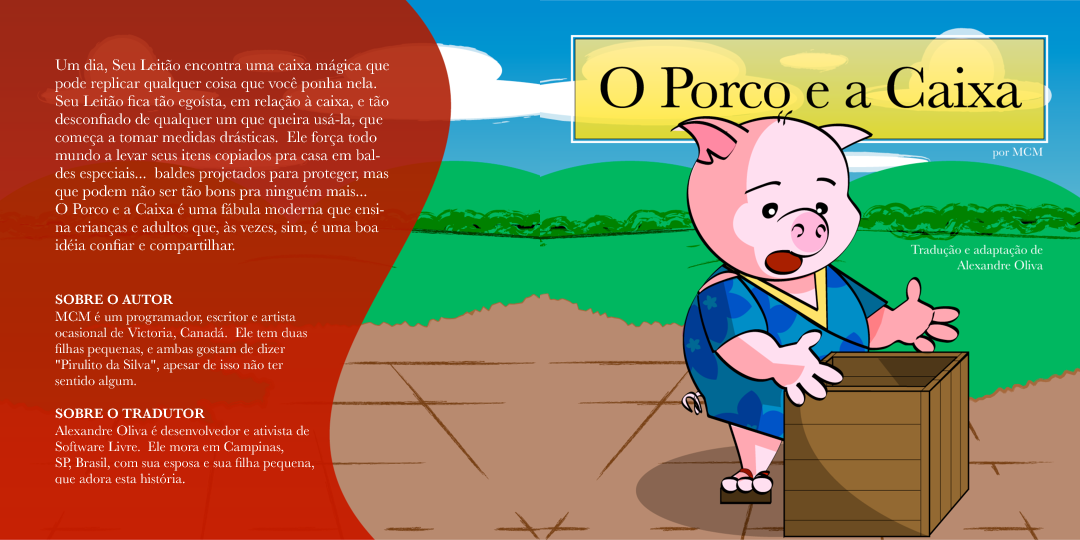 Also on Friday, April 18, 2008,
at FISL, FSFLA
launched "O Porco e a
Caixa", the translation to Brazilian Portuguese of MCM's
"The Pig and the
Box", a book that teaches the perils of DRM to children. I
printed some 500 copies, but the organizers of FISL liked it so
much that they announced in the closing session that we'd print
10000 copies for FISL 10. Yay! In the end, it didn't happen, but
it was very exciting nevertheless.
On May 6, 2010, I had the wonderful and very exciting
opportunity to tell the story to 7- and 8-year-old students of a
public school in João Pessoa,
at IV ENSOL. Thanks to the
organizers for pulling it off. It was told to school children
again on August 31, 2011, in Santarém,
at FASOL 2011.
Also on Friday, April 18, 2008,
at FISL, FSFLA
launched "O Porco e a
Caixa", the translation to Brazilian Portuguese of MCM's
"The Pig and the
Box", a book that teaches the perils of DRM to children. I
printed some 500 copies, but the organizers of FISL liked it so
much that they announced in the closing session that we'd print
10000 copies for FISL 10. Yay! In the end, it didn't happen, but
it was very exciting nevertheless.
On May 6, 2010, I had the wonderful and very exciting
opportunity to tell the story to 7- and 8-year-old students of a
public school in João Pessoa,
at IV ENSOL. Thanks to the
organizers for pulling it off. It was told to school children
again on August 31, 2011, in Santarém,
at FASOL 2011.
 On Fri 13th of April, 2007, I first
presented Free Software and the
Matrix at FISL
8.0. The presentation (in Portuguese, English and Spanish),
the trailers and the sources are
available here.
It was presented on April 28, 2007,
at FLISoL
Campinas; on
May 2, 2007, at USP-EACH; on May 26, 2007
at IV ESLAM; on
June 6, 2007 at
SESOL3; on August 9,
2007 at 7mas Jornadas
Regionales de Software Libre, in Córdoba, Argentina; on Oct
18, 2007
at Convención
Visión 2007 in Lima, Peru; on Oct 18-20
at Encontro Mineiro de
Software Livre in Lavras, Minas Gerais, Brazil (presented by
José Monserrat Neto, thanks!); on Nov 19-21 at the Academic Week
of Computing and Internet Systems at Univali, in Itajaí, SC,
Brazil (presented by Fabricio Bortoluzzi); on Dec 5, 2007,
at VI Semana
[GNU/]Linux Universidad Distrital, in Bogota, Colombia; on
March 4, 2009, opening
the Free
Software Lectures series at University of Campinas; and on
April 15, 2009, transmitted on FLISOL TV out of Panamá City, as
part of FLISOL
2009 pre-events; on May 9, 2009,
by Tiago
Maluta to the freshmen at Federal University of Itajubá; and
at
the 5th
National Free Software Congress in Caracas, Venezuela, on July
18, 2009.
On Fri 13th of April, 2007, I first
presented Free Software and the
Matrix at FISL
8.0. The presentation (in Portuguese, English and Spanish),
the trailers and the sources are
available here.
It was presented on April 28, 2007,
at FLISoL
Campinas; on
May 2, 2007, at USP-EACH; on May 26, 2007
at IV ESLAM; on
June 6, 2007 at
SESOL3; on August 9,
2007 at 7mas Jornadas
Regionales de Software Libre, in Córdoba, Argentina; on Oct
18, 2007
at Convención
Visión 2007 in Lima, Peru; on Oct 18-20
at Encontro Mineiro de
Software Livre in Lavras, Minas Gerais, Brazil (presented by
José Monserrat Neto, thanks!); on Nov 19-21 at the Academic Week
of Computing and Internet Systems at Univali, in Itajaí, SC,
Brazil (presented by Fabricio Bortoluzzi); on Dec 5, 2007,
at VI Semana
[GNU/]Linux Universidad Distrital, in Bogota, Colombia; on
March 4, 2009, opening
the Free
Software Lectures series at University of Campinas; and on
April 15, 2009, transmitted on FLISOL TV out of Panamá City, as
part of FLISOL
2009 pre-events; on May 9, 2009,
by Tiago
Maluta to the freshmen at Federal University of Itajubá; and
at
the 5th
National Free Software Congress in Caracas, Venezuela, on July
18, 2009.
On April 25, 2007, FSFLA liberated
the formerly-non-Free Brazilian Income
Tax form-filling software. The Free Software version,
IRPF2007-Livre, is
available here. The
history is covered in detail
here.
I've talked about
this in detail on
Aug 10, 2007, at FSFLA's presentation
at 7mas Jornadas
Regionales de Software Libre, in Córdoba, Argentina, and I'll
do so again on Dec 6, 2007,
at VI Semana
[GNU/]Linux Universidad Distrital, in Bogota, Colombia.
On April 25, 2008, FSFLA
liberated IRPF-Livre 2008,
announced here.
On April 17, 2009, FSFLA liberated
IRPF-Livre 2009,
announced here.
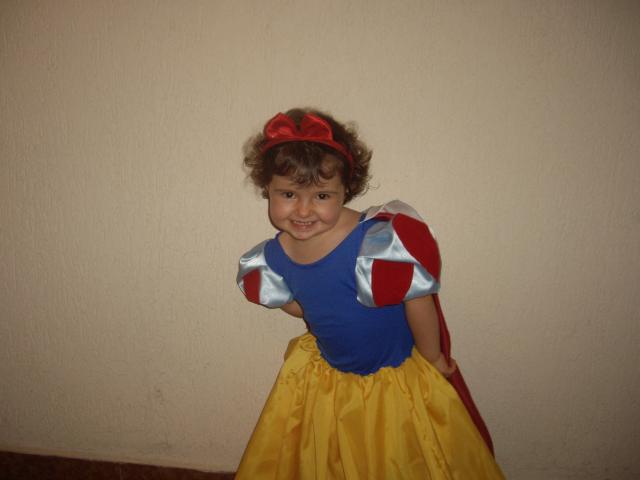 On April 14, 2007, I first
presented "Magic mirror on the
net, what's the fairest license yet? A GPLv3 fairness tale."
at FISL 8.0,
discussing the fairness improvements
of GPLv3 over version 2 with a
Snow White coloring.
It was also presented on June 8, 2007 at
SESOL3 and on Aug
11, 2007, at
7mas Jornadas Regionales
de Software Libre, in Córdoba, Argentina; on Oct 4, 2007, at
Fórum Software
Livre Rio de Janeiro; Oct 20, 2007
at ./Freedom & Open
Source Day, part
of Convención
Visión 2007 in Lima, Peru (watch
the video);
on Nov 13-14, 2007
at Latinoware in Foz do
Iguaçu, Brasil; and on Dec 17, 2007,
at UMeet 2007, an
on-line conference.
On April 14, 2007, I first
presented "Magic mirror on the
net, what's the fairest license yet? A GPLv3 fairness tale."
at FISL 8.0,
discussing the fairness improvements
of GPLv3 over version 2 with a
Snow White coloring.
It was also presented on June 8, 2007 at
SESOL3 and on Aug
11, 2007, at
7mas Jornadas Regionales
de Software Libre, in Córdoba, Argentina; on Oct 4, 2007, at
Fórum Software
Livre Rio de Janeiro; Oct 20, 2007
at ./Freedom & Open
Source Day, part
of Convención
Visión 2007 in Lima, Peru (watch
the video);
on Nov 13-14, 2007
at Latinoware in Foz do
Iguaçu, Brasil; and on Dec 17, 2007,
at UMeet 2007, an
on-line conference.
On March 27, a new
presentation "Software Livre:
Um Bem Necessário" (Free Software: a Necessary Good) was first
presented at
the Regional
Symposium on Digital Inclusion, organized by CDI Campinas. On
March 28, it was
at AtualTec
2007. It was to be presented again
at FLISoL 2007, on April 28,
but, by popular demand, Free Software and The
Matrix was presented instead.
 On Aug 25, 2006, I first
presented "As Ações Mais Legais
da FSFLA" (the coolest/most legal FSFLA actions)
at Festival de
Software Livre da Bahia, in Lauro de Freitas. Congratulations
to the organizers for the great event!
I took a few pictures
and recorded my presentations (in Portuguese).
In that presentation, I talk about the preference for Free
Software encoded in the Brazilian Constitution, which we argue
about in the context of the inconstitutionality case raised
against the Free Software law in Rio Grande do Sul. Read more
about it in FSFLA's
news bulletin #14.
It was presented again on Oct 18, 2006, at
the IV Fórum de
Software Livre do Rio de Janeiro, and on Oct 20, 2006, at
the III Fórum
Cearense de Software Livre.
A shortened version was
presented in a round table on copyrights, patents and Free
Software on May 26, 2007 at
IV ESLAM.
An adapted English version of this speech was presented on
Nov 21, 2006, at the 5th
International GPLv3 Conference in Tokyo, Japan.
A video
of the presentation is available out of the conference web
site. I took a few
pictures while I was there.
The latest presentation of
this English version was on
December 13, 2006, as part of UMeet
2006. A recording (IRC logs) is
available here.
On April 13, 2007,
an updated version of
this speech was delivered by all FSFLA board members,
at FISL 8.0.
In general, I play this
great movie on Trusted Computing after talking about DRM.
It was also presented on May 25, 2007 at
IV ESLAM.
It was presented for the first
time in Spanish on
August 10, 2007, at
7mas Jornadas Regionales
de Software Libre, in Córdoba, Argentina.
A slightly extended
version was presented on Dec 6, 2007,
at VI Semana
[GNU/]Linux Universidad Distrital, in Bogota, Colombia.
The 2008 version of
this speech updates on Softwares Impostos, Free Open Standards,
and launches, on April 18,
at FISL, the first
print of the Brazilian
Portuguese translation of
MCM's "The Pig
and the Box" and FSFLA's "¡Sé Libre!" (Be Free!) campaign for
the promotion of the fundamental social values of the Free
Software movement. It was also presented on August, 21, 2008,
at CESoL-CE, and elsewhere,
combined with the campaign against tobraco.
The apology
to software users portion at the end of this speech was
recorded in Spanish
for FLISOL 2009,
listen to this and other recorded
speeches here
On Aug 25, 2006, I first
presented "As Ações Mais Legais
da FSFLA" (the coolest/most legal FSFLA actions)
at Festival de
Software Livre da Bahia, in Lauro de Freitas. Congratulations
to the organizers for the great event!
I took a few pictures
and recorded my presentations (in Portuguese).
In that presentation, I talk about the preference for Free
Software encoded in the Brazilian Constitution, which we argue
about in the context of the inconstitutionality case raised
against the Free Software law in Rio Grande do Sul. Read more
about it in FSFLA's
news bulletin #14.
It was presented again on Oct 18, 2006, at
the IV Fórum de
Software Livre do Rio de Janeiro, and on Oct 20, 2006, at
the III Fórum
Cearense de Software Livre.
A shortened version was
presented in a round table on copyrights, patents and Free
Software on May 26, 2007 at
IV ESLAM.
An adapted English version of this speech was presented on
Nov 21, 2006, at the 5th
International GPLv3 Conference in Tokyo, Japan.
A video
of the presentation is available out of the conference web
site. I took a few
pictures while I was there.
The latest presentation of
this English version was on
December 13, 2006, as part of UMeet
2006. A recording (IRC logs) is
available here.
On April 13, 2007,
an updated version of
this speech was delivered by all FSFLA board members,
at FISL 8.0.
In general, I play this
great movie on Trusted Computing after talking about DRM.
It was also presented on May 25, 2007 at
IV ESLAM.
It was presented for the first
time in Spanish on
August 10, 2007, at
7mas Jornadas Regionales
de Software Libre, in Córdoba, Argentina.
A slightly extended
version was presented on Dec 6, 2007,
at VI Semana
[GNU/]Linux Universidad Distrital, in Bogota, Colombia.
The 2008 version of
this speech updates on Softwares Impostos, Free Open Standards,
and launches, on April 18,
at FISL, the first
print of the Brazilian
Portuguese translation of
MCM's "The Pig
and the Box" and FSFLA's "¡Sé Libre!" (Be Free!) campaign for
the promotion of the fundamental social values of the Free
Software movement. It was also presented on August, 21, 2008,
at CESoL-CE, and elsewhere,
combined with the campaign against tobraco.
The apology
to software users portion at the end of this speech was
recorded in Spanish
for FLISOL 2009,
listen to this and other recorded
speeches here
October 1, 2006, is elections day in Brazil. The "ultimate"
electronic voting system used in Brazil enables results to be
published just a few hours after polls are closed. And there has
never been any proof of corruption in the results. If you can
read Portuguese, see why
that's not surprising. You may also be interested in the Free
Software program I wrote that
attempts to present results for the polls, similarly to the
MS-Windows-only program that the Superior Electoral Court (TSE)
publishes.
I came up with a way to optimize access to Thread-Local Storage,
i.e., variables managed by the run-time system such that they hold
a different value in each thread of execution. Find out more
about it here. See
the paper and
the slides presented on June
29 at the GCC Summit
2006; on June 7, 2007,
at SESOL3; and on
March 17, 2008,
at Bossa'08
Conference.
Glauber talked
about his port of these
ideas to ARM
at [GNU/]Linux
Kongress 2006 on Sept 8, 2006.
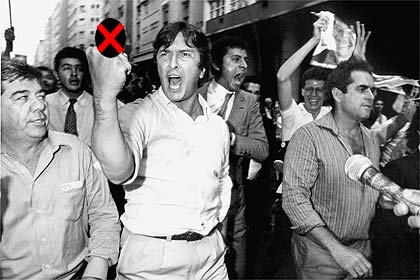 For FISL
7.0, in April 2006, I came up with the
presentation O Poder Libertador
do Segundo Dedo (that translates to English
as The Freeing Power of the
Second Finger). Besides the important Free Software-related
issues that I feel I always have to talk about, it shows how Free
Software users at an advantage position over proprietary software
users, especially corporate ones, because while both recognize the
need for support (pointing to someone when things go wrong), only
Free Software users can use another finger, without the fear of
getting to a dead end, when things keep on going wrong. A
poor-ish recording of the presentation at the Festival de Software
Livre da Bahia, in Portuguese, is
available here.
It was presented on August 30, 2011, in Santarém,
at FASOL 2011.
It was presented again on Oct 17, 2006, at
the IV Fórum de
Software Livre do Rio de Janeiro, and on Oct 19, 2006, at
the III Fórum
Cearense de Software Livre
The latest presentation in English was on December 13, 2006,
as part of UMeet
2006. A recording (IRC logs) is available here.
On April 23, 2009, it was first
presented in Spanish, as part
of FLISOL 2009
Tour, in Chitré, Herrera province, Panamá, in combination with
A Beautiful Mind Meets Free Software
and The Competitive Advantages of Free
Software.
Attendants took
pictures and shot videos.
Thanks to the authors of the TV Show Casseta & Planeta
for the inspiration, even if with a delay of 15 years or so :-)
May Bussunda, probably the most well-known member of this great
team of comedy writers and actors, who passed away in Germany
during the Soccer World Cup, rest in peace and not be forgotten
:-(
For FISL
7.0, in April 2006, I came up with the
presentation O Poder Libertador
do Segundo Dedo (that translates to English
as The Freeing Power of the
Second Finger). Besides the important Free Software-related
issues that I feel I always have to talk about, it shows how Free
Software users at an advantage position over proprietary software
users, especially corporate ones, because while both recognize the
need for support (pointing to someone when things go wrong), only
Free Software users can use another finger, without the fear of
getting to a dead end, when things keep on going wrong. A
poor-ish recording of the presentation at the Festival de Software
Livre da Bahia, in Portuguese, is
available here.
It was presented on August 30, 2011, in Santarém,
at FASOL 2011.
It was presented again on Oct 17, 2006, at
the IV Fórum de
Software Livre do Rio de Janeiro, and on Oct 19, 2006, at
the III Fórum
Cearense de Software Livre
The latest presentation in English was on December 13, 2006,
as part of UMeet
2006. A recording (IRC logs) is available here.
On April 23, 2009, it was first
presented in Spanish, as part
of FLISOL 2009
Tour, in Chitré, Herrera province, Panamá, in combination with
A Beautiful Mind Meets Free Software
and The Competitive Advantages of Free
Software.
Attendants took
pictures and shot videos.
Thanks to the authors of the TV Show Casseta & Planeta
for the inspiration, even if with a delay of 15 years or so :-)
May Bussunda, probably the most well-known member of this great
team of comedy writers and actors, who passed away in Germany
during the Soccer World Cup, rest in peace and not be forgotten
:-(
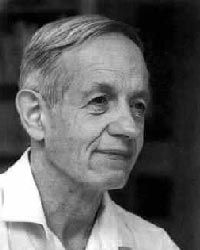 As of June, 2005, I came up with a newer presentation
entitled A Beautiful Mind
Meets Free Software: Game Theory, Competition and Cooperation.
It was first presented to a wide audience on June 4, 2005,
at FISL 6.0, after
a presentation to prof Tiemi Sakata's students in Sorocaba. It
was also presented at
the III ESLAM, on
October 13, 2005 in Manaus, AM (I
took some pictures
there);
5tas
Jornadas Regionales de Software Libre, in Rosario, Santa Fe,
Argentina, on Nov 21, 2005; Portalcon Software
Livre's 1º
GNU/Linux Day, in Americana, SP; at
the Workshop
Cearense de Software Livre e Mobilidade on December 13, 2005,
in Fortaleza, CE; on Oct 20, 2006, at
the III Fórum
Cearense de Software Livre, also in Fortaleza; at the
Brazilian finals of the 2006/2007 ACM International Collegiate
Programming Contest, on November 11, 2006.
The paper
on it was published at the Exact Sciences Colloquium at Uninove,
on November 25, 2006. There's a nicer
(IMHO) LaTeX
rendering too.
I've recorded
the presentation audio (Ogg Speex format), in Portuguese, but the
quality is unfortunately quite poor :-(
On April 23, 2009, it was first
presented in Spanish, as
part of FLISOL
2009 Tour, in Chitré, Herrera province, Panamá, in combination
with
The Freeing Power of the Second Finger
and The Competitive Advantages of Free
Software.
I'd like to thank my wife, Islene, for the drawings.
If you're interested in economics involving Free Software,
in addition to the sites mentioned in the presentation, you may
want to read:
As of June, 2005, I came up with a newer presentation
entitled A Beautiful Mind
Meets Free Software: Game Theory, Competition and Cooperation.
It was first presented to a wide audience on June 4, 2005,
at FISL 6.0, after
a presentation to prof Tiemi Sakata's students in Sorocaba. It
was also presented at
the III ESLAM, on
October 13, 2005 in Manaus, AM (I
took some pictures
there);
5tas
Jornadas Regionales de Software Libre, in Rosario, Santa Fe,
Argentina, on Nov 21, 2005; Portalcon Software
Livre's 1º
GNU/Linux Day, in Americana, SP; at
the Workshop
Cearense de Software Livre e Mobilidade on December 13, 2005,
in Fortaleza, CE; on Oct 20, 2006, at
the III Fórum
Cearense de Software Livre, also in Fortaleza; at the
Brazilian finals of the 2006/2007 ACM International Collegiate
Programming Contest, on November 11, 2006.
The paper
on it was published at the Exact Sciences Colloquium at Uninove,
on November 25, 2006. There's a nicer
(IMHO) LaTeX
rendering too.
I've recorded
the presentation audio (Ogg Speex format), in Portuguese, but the
quality is unfortunately quite poor :-(
On April 23, 2009, it was first
presented in Spanish, as
part of FLISOL
2009 Tour, in Chitré, Herrera province, Panamá, in combination
with
The Freeing Power of the Second Finger
and The Competitive Advantages of Free
Software.
I'd like to thank my wife, Islene, for the drawings.
If you're interested in economics involving Free Software,
in addition to the sites mentioned in the presentation, you may
want to read:
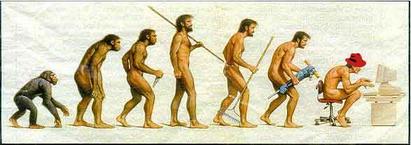 I wrote a paper entitled ``The Competitive Advantages of Free
Software´´, originally for the
Workshop
about Free Software 2000, a parallel event to the 1st Free Software
International Forum 2000. The originally published version is
available as a gzipped postscript
for ISO-A4 paper. An updated version (last modified on August
13, 2001, except for the addition of copyright and redistribution
terms on July 19, 2002) is available as browsable html and
pdf for letter-sized
paper.
After many presentations all over from 2000 to 2002, it was
later presented at FISL 4.0, some time in June, 2003; on Oct 20,
2006, at
the III Fórum
Cearense de Software Livre.
The latest version of the slides used in my presentation at
several different conferences is available in pdf format.
On April 22, 2009, it was first
presented in Spanish, as part
of FLISOL 2009
Tour, in Panamá City, and on April 23, 2009, in Chitré,
Herrera province, Panamá, in combination with
The Freeing Power of the Second Finger
and A Beautiful Mind Meets Free Software. It
was also presented on August 8, 2015
at ECSL 2015 in San
Pedro Sula, Honduras.
I wrote a paper entitled ``The Competitive Advantages of Free
Software´´, originally for the
Workshop
about Free Software 2000, a parallel event to the 1st Free Software
International Forum 2000. The originally published version is
available as a gzipped postscript
for ISO-A4 paper. An updated version (last modified on August
13, 2001, except for the addition of copyright and redistribution
terms on July 19, 2002) is available as browsable html and
pdf for letter-sized
paper.
After many presentations all over from 2000 to 2002, it was
later presented at FISL 4.0, some time in June, 2003; on Oct 20,
2006, at
the III Fórum
Cearense de Software Livre.
The latest version of the slides used in my presentation at
several different conferences is available in pdf format.
On April 22, 2009, it was first
presented in Spanish, as part
of FLISOL 2009
Tour, in Panamá City, and on April 23, 2009, in Chitré,
Herrera province, Panamá, in combination with
The Freeing Power of the Second Finger
and A Beautiful Mind Meets Free Software. It
was also presented on August 8, 2015
at ECSL 2015 in San
Pedro Sula, Honduras.
These are some Free
Software projects I'm involved with (even though I'm mostly
inactive on most of them, except for the first two):
-
GNU Linux-libre: a
100% Free version of the kernel Linux.
-
GCC: the GNU Compiler
Collection. My primary jobs have been on it since 2000. I'm
a maintainer of some subsystems.
-
GNU
binutils, the assembler, linker, and other tools that deal
with object files on GNU and other systems. I'm a port
maintainer for a few targets, but I haven't been very active.
-
GNU
libc, the base system library in most GNU/Linux systems.
I'm officially one of the maintainers, but I haven't been
active in the project for several years.
Some other projects I've already contributed to in the past, or
would like to contribute to in the future, if I manage to get more
than 24 hours a day :-)
-
Guaraná: a Free
implementation of the reflective architecture designed during
my MSc.
-
Libtool:
a GNU portable shared and static library generator, started
by Gordon Matzigkeit. I
was one of its maintainers.
-
Autoconf:
the GNU automatic software configuration package. I was one
of its maintainers.
-
Automake:
the GNU Makefile generator, originally
by Tom Tromey. I was
one of its maintainers.
-
Amanda: a backup system,
originally by Jaime da
Silva. I was one of its maintainers.
-
Kaffe: a Free Java Virtual
Machine, started by Tim
Wilkinson, one of the founders of Transvirtual
Technologies.
-
SAMBA: a Free
implementation of the SMB protocol, that allows Unix hosts to
share files with MS-Windows hosts.
-
Ad HoC: an m4-based
portable shell script generator, quite similar to GNU
autoconf, but initially targeted at system administration
(thus the name: Advanced Host
Configuration), and now aiming at a broader set of
applications (virtually anything :-). It was to be a new GNU
project. It's available via anonymous CVS from
:pserver:anoncvs@subversions.gnu.org:/cvsroot/adhoc
(empty password), module adhoc. The project never
had a home page, but we've got
a mailing-list.
To subscribe, send
a message to
adhoc-request@gnu.org with subscribe in
the body. A pre-release containing one rather involving
example and virtually no user-oriented documentation :-(, is
available here. Snapshots are
in general untested, so use them with care.
-
CVS Utilities: a couple
of CVS-related scripts to ease the creation and installation
of patches, and the management of CVS trees, some of which are
also known to work with SVN and GIT. The CVS tree is
available at
:pserver:anoncvs@subversions.gnu.org:/cvsroot/cvs-utils
(empty password), module cvs-utils. It's got a
mailing list for general
discussion (send the word subscribe to
cvs-utils-request@gnu.org to subscribe) and
another for CVS
commit messages. It may eventually merge with Pavel Roskin's cvsutils, a
couple of scripts that implement ``disconnected´´ CVS
operations.
-
LVreorg: A shell script that
moves logical extents in a GNU/Linux LVM volume group so as to
conform with a specification given in an input file. Useful
after you pvmove the contents of a disk, replace it, and want
to get back to what you had before. Last updated Feb 10,
2003. It probably doesn't work with current LVM tools.
-
rpmdup-reinstall: A
shell script that attempts to identify partial updates on a
system by looking for multiply-installed packages, downloading
updated versions with up2date and re-installing them. Does
anyone still use up2date? Last updated Mar 7, 2004.
-
DNAcode: A joke program that
converts DNA sequences from/to base64 and plain text.
-
Lilypond: the GNU music typesetting program, by Han-Wen Nienhuys and Jan Nieuwenhuizen.
-
CIVS: the Condorcet Internet Voting System, by Andrew
C. Myers. I stripped it
down such that FSFLA
could use it to compute Condorcet/Schulze voting results
without the need for setting up web-based voting.
You may find some source and binary packages for Red Hat
Linux that I've packaged here.
I've written some notes on
addressing the few problems I ran into while setting up Fedora
Core 3 Test 3 on my (then) shiny new Compaq Presario r3004
Athlon64 notebook. They apply to Fedora Core 3 as well.
Fedora Core 2 shipped
without Firewire modules because they were severely broken in the
upstream kernel. Kernel updates are fixed, but if you want to
install it or use the original kernels, read this.
I've taught a short Java course in the Second Brazilian Symposium
on Programming Languages. The errata of
the course notes (in Portuguese) are available on-line. If
you want a copy of the (outdated) course notes (also in
Portuguese), please let
me know.
Between 1995 and 1997, I taught Maths in a school that helps poor
students improve their chances of succeeding in the College
Entrance Examination (Vestibular). You may find out more
about this social project and read its monthly publication in the
home page of
Cursinho DCE (in Portuguese).
You may find some jokes and funny stories I have collected here.
My snail-mail address and
my Gnu Privacy
Guard public key (signed by my
older key) are available.
 If you have any suggestions, comments or questions, feel
free to e-mail me.
This page is
Best Viewed With Any Browser.
Anti-piracy policy: please do not attack ships, especially
while visiting this site
Last modified $Date: 2026/08/23 15:29:31 $ UTC
If you have any suggestions, comments or questions, feel
free to e-mail me.
This page is
Best Viewed With Any Browser.
Anti-piracy policy: please do not attack ships, especially
while visiting this site
Last modified $Date: 2026/08/23 15:29:31 $ UTC
 I wrote a paper entitled ``The Competitive Advantages of Free
Software´´, originally for the
Workshop
about Free Software 2000, a parallel event to the 1st Free Software
International Forum 2000. The originally published version is
available as a gzipped postscript
for ISO-A4 paper. An updated version (last modified on August
13, 2001, except for the addition of copyright and redistribution
terms on July 19, 2002) is available as browsable html and
pdf for letter-sized
paper.
After many presentations all over from 2000 to 2002, it was
later presented at FISL 4.0, some time in June, 2003; on Oct 20,
2006, at
the III Fórum
Cearense de Software Livre.
The latest version of the slides used in my presentation at
several different conferences is available in pdf format.
On April 22, 2009, it was first
presented in Spanish, as part
of FLISOL 2009
Tour, in Panamá City, and on April 23, 2009, in Chitré,
Herrera province, Panamá, in combination with
The Freeing Power of the Second Finger
and A Beautiful Mind Meets Free Software. It
was also presented on August 8, 2015
at ECSL 2015 in San
Pedro Sula, Honduras.
I wrote a paper entitled ``The Competitive Advantages of Free
Software´´, originally for the
Workshop
about Free Software 2000, a parallel event to the 1st Free Software
International Forum 2000. The originally published version is
available as a gzipped postscript
for ISO-A4 paper. An updated version (last modified on August
13, 2001, except for the addition of copyright and redistribution
terms on July 19, 2002) is available as browsable html and
pdf for letter-sized
paper.
After many presentations all over from 2000 to 2002, it was
later presented at FISL 4.0, some time in June, 2003; on Oct 20,
2006, at
the III Fórum
Cearense de Software Livre.
The latest version of the slides used in my presentation at
several different conferences is available in pdf format.
On April 22, 2009, it was first
presented in Spanish, as part
of FLISOL 2009
Tour, in Panamá City, and on April 23, 2009, in Chitré,
Herrera province, Panamá, in combination with
The Freeing Power of the Second Finger
and A Beautiful Mind Meets Free Software. It
was also presented on August 8, 2015
at ECSL 2015 in San
Pedro Sula, Honduras.
